


You are not a friend. You are a utility. Social media has made this dynamic visible. We now see exactly who is hanging out without us, and yet, we still answer the text. Part 4: The Psychology – Why Do We Accept The Chains? If being a "Budak" is so painful, why does the POV trend go viral? Because it exposes a dirty secret: Sometimes, being needed feels better than being loved.
In the digital era, particularly within the bustling social media spheres of Indonesia, Malaysia, and Singapore, a specific phrase has emerged not just as slang, but as a mirror reflecting a generation's anxiety. — which translates roughly to "The Point of View of Being a Slave" — is trending not because people are literally in bondage, but because a shocking number of individuals feel like one in their daily interpersonal relationships.
But the viral nature of this POV suggests a shift. By laughing at the meme of the exhausted friend, the tired partner, and the overlooked sibling, we are collectively realizing that You are not a friend
Because we are connected via WhatsApp, Discord, and Instagram 24/7, the expectation of response has become tyrannical. The "Budak" dynamic exists because boundaries have been eroded. We fear that muting a notification means losing a relationship.
Start small. Say no to the small request. Let the world be disappointed. You might find that on the other side of that disappointment is the freedom you never knew you lost. We now see exactly who is hanging out
This article is part of a series on modern social dynamics and relationship toxicity in the digital age.
By A Social Observer
To understand this phenomena is to dissect the modern power struggle. The term "Budak" (slave/servant) has historically been derogatory, but Gen Z and Millennials have co-opted it to describe a specific state of emotional, financial, and social exhaustion. This article explores the mechanics of this dynamic: How do you end up as the "Budak" in your friendship circle? When does a romantic relationship turn into a feudal system? And most importantly, how do you break the chain? Traditionally, a budak is someone without agency. In the modern "POV Jadi Budak" context, agency is replaced by perceived obligation .
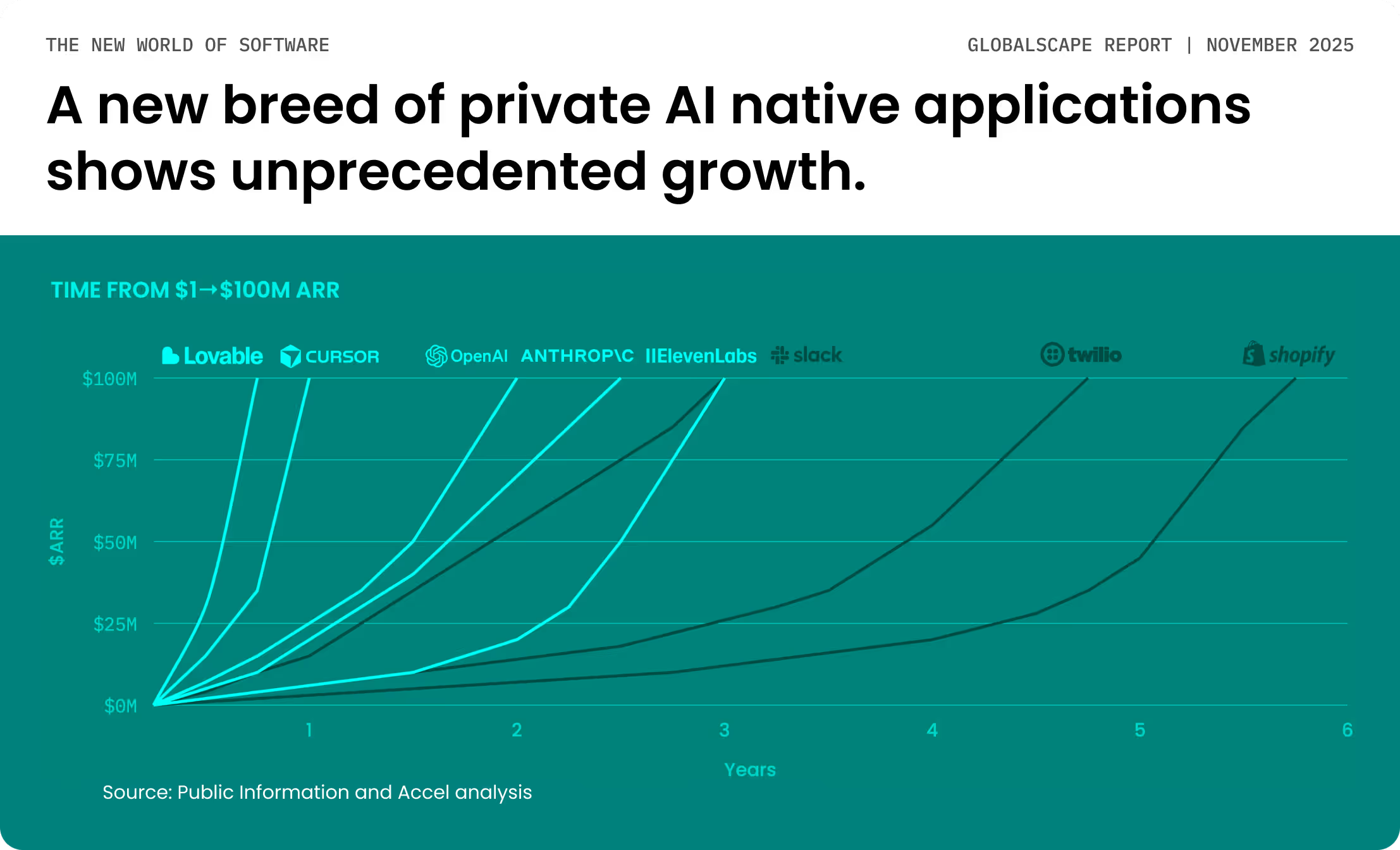
We are witnessing a tectonic shift, with AI accelerating innovation across the globe and unprecedented growth in AI native applications and enterprise agentic workflows. This shift will require an estimated $4 trillion investment in computing data centers over the next five years.

Report
Report
Report
Report
Report
Report
Report
Report