Downloads

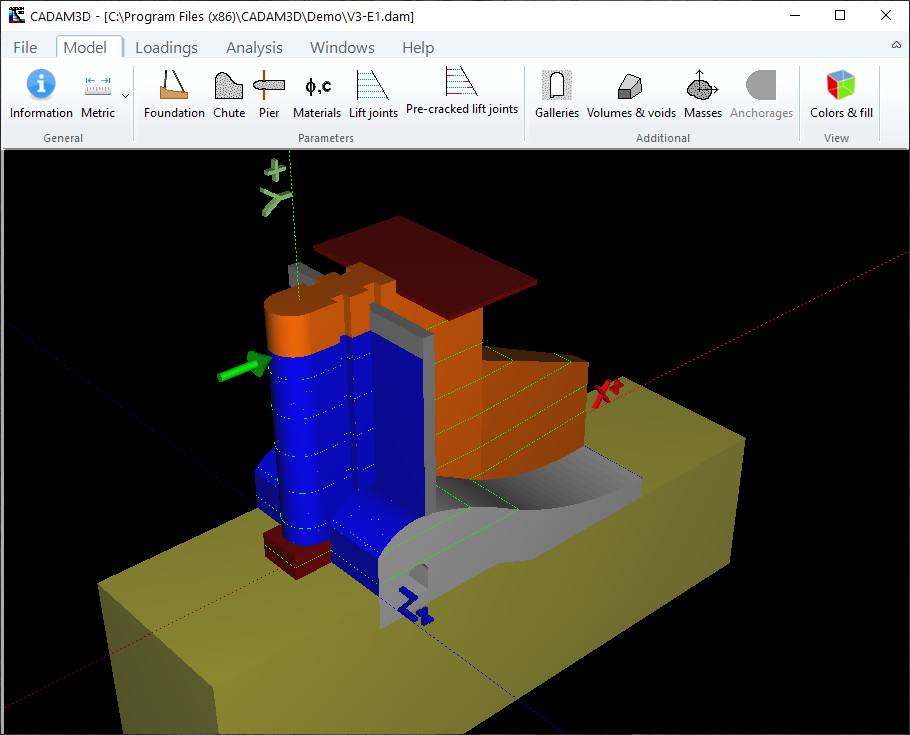
CADAM3D is a user-friendly software based on the gravity method originally developed for one of the world biggest concrete dam owner, Hydro-Quebec, and for Dams and Hydrology of the Quebec Ministry of Environment (Quebec's legislator for dam safety). CADAM3D is fully functional and is intensively used by Hydro-Quebec since 2005. To our knowledge, no other software similar to CADAM3D is available at this time.
If you perform stability analyzes of concrete hydraulic structures, this software will allow you to perform them much faster and more efficiently. If you are interested in this type of software and would like to try CADAM3D for free, please click on the button "Contact us for a free trial of CADAM3D" to send us a message.
The is an alluring search term, but the reality is that the physical book is so affordable (often under ₹300) that the time you spend hunting for a virus-free, complete PDF on sketchy websites is worth more than the cost of the book.
For students of physics and engineering across India and beyond, the journey into the world of motion, forces, and energy often begins with a search for the right textbook. Among the sea of reference books—from H.C. Verma’s Concepts of Physics to Resnick and Halliday—stands a distinguished text that has earned a loyal following in university classrooms: "Introduction to Mechanics" by Prof. Mahendra K. Verma . introduction to mechanics by mahendra k verma pdf
Remember: The goal is not just to possess the PDF, but to understand Newton’s laws, master rotational dynamics, and solve projectile problems with confidence. A high-quality, legal copy—whether physical or official e-book—is your best tool for that journey. Do not let the search for a free PDF distract you from the actual learning. Go, buy the book, and start practicing. Your future grades will thank you. The is an alluring search term, but the
If you have landed on this page searching for the you are likely a student looking for an accessible, rigorous, and affordable way to master Newtonian mechanics. This article serves as a comprehensive guide to the book, its contents, its unique pedagogical approach, and the legal and ethical considerations surrounding its digital version. Who is Mahendra K. Verma? Before diving into the PDF details, it is crucial to understand the authority behind the book. Prof. Mahendra K. Verma is a renowned physicist and a professor at the Department of Physics, Indian Institute of Technology (IIT) Kanpur. He specializes in fluid dynamics and turbulence, but his true gift to the undergraduate community is his ability to break down classical mechanics into digestible, logical segments. Remember: The goal is not just to possess
| Book Title | Author | Cost | Best For | | :--- | :--- | :--- | :--- | | | Mahendra K Verma | Low (Physical) | IIT-JEE foundation, B.Sc. | | Concepts of Physics (Vol. 1) | H.C. Verma | Moderate | Conceptual clarity + Numericals | | Mechanics | D.S. Mathur | Very Low | Indian university exam prep | | University Physics | OpenStax | Free (Legal PDF) | Standard US college curriculum | Final Verdict: Should you search for the PDF? The short answer: No, you should buy the book.
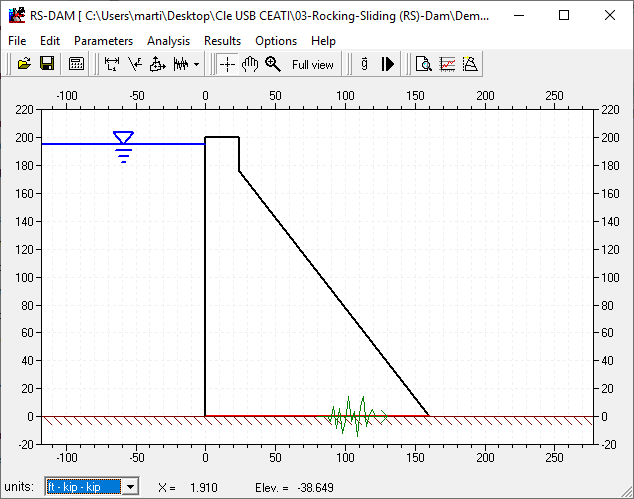
RS-DAM is a computer program that was primarily designed to provide a computational tool to evaluate the transient response of a completely cracked concrete dam section subjected to seismic loads. RS-DAM is also used to support research and development on structural behavior and safety of concrete dams.
RS-DAM is based on rigid body dynamic equilibrium. It performs a transient rocking and/or sliding analysis of a cracked dam section subjected to either base accelerations or time varying forces. Several modelling options have been included to allow users to explore the influence of parameters (e.g. geometry, additional masses, variation of the uplift force upon rotation, hydrodynamic pressures in translation (Westergaard) and rotation, center of rotation moving with sliding, coefficient of restitution of impact, etc...). RS-DAM is developed in a university context and has no commercial aspect.
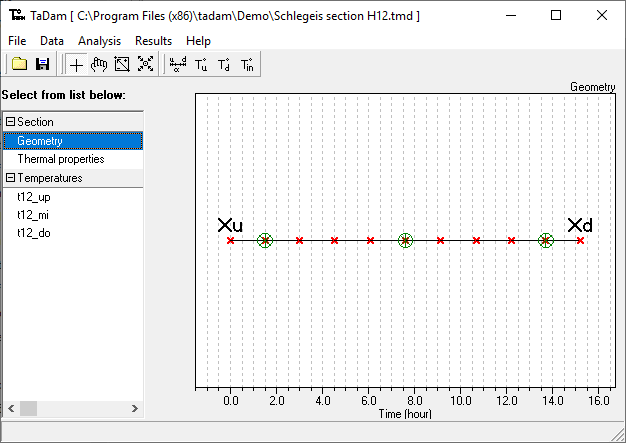
TADAM (Thermal Analysis of concrete DAMs) software employs a new frequency-domain solution technique to solve the 1D thermal transfer problem, allowing the calculation of temperature histories in a concrete dam section.
The direct solution calculates the evolution of the temperature distributions from the temperature histories of the upstream and downstream faces. The inverse solution uses temperature histories, measured inside the section, in order to calculate the temperature fields at the external faces, while taking into account the thermal wave attenuation effects and the phase angles along the section.
TADAM is developed in a university context and has no commercial aspect.